
Thermal printers create images with a heated printhead, yet the two main methods use that heat differently. Direct thermal equipment activates a chemical coating already present on the media. Thermal transfer equipment heats a coated ribbon and moves its pigment onto paper or synthetic stock. This distinction determines what operators must load, how the image responds to its surroundings, and which applications each method can reliably support.
For teams choosing labels for thermal transfer printers, the substrate is only part of the system. The ribbon formulation and printer settings must suit that material. Zebra Technologies identifies wax, wax-resin, and resin as the main ribbon categories, with progressively different resistance to smudging, chemicals, temperature, and abrasion. Compatibility testing therefore matters as much as nominal label size.
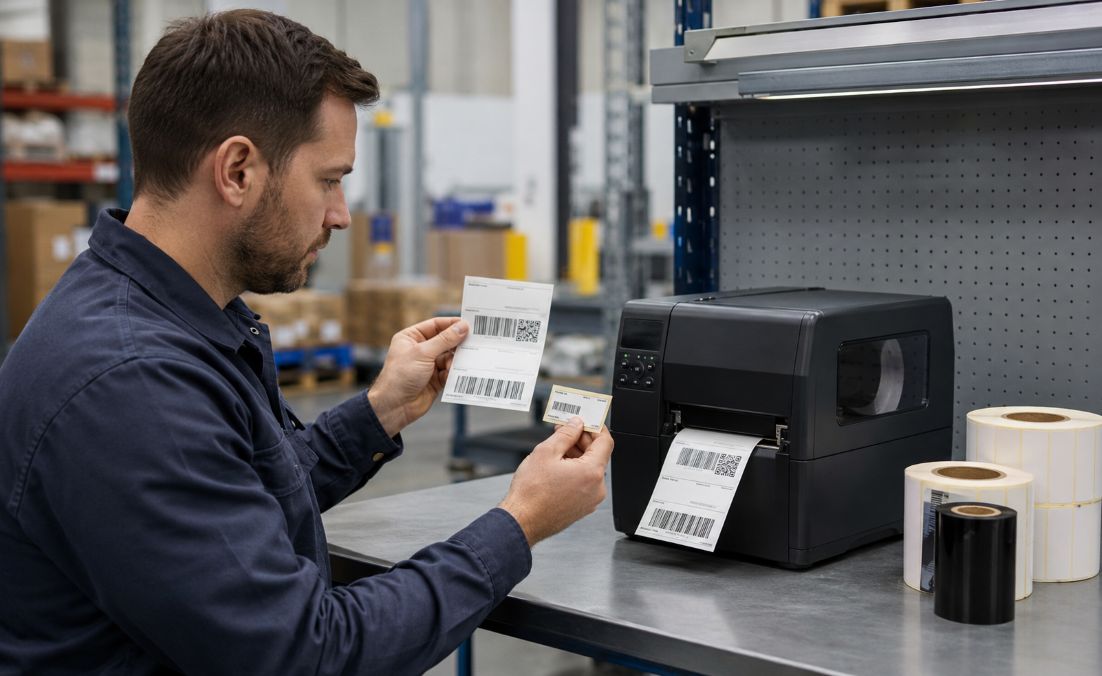
The Case for Direct Thermal Printing
Direct thermal makes the stronger argument when operational simplicity is the priority. There is no ribbon, ink, or toner to install, monitor, or store. A worker changes the media roll and continues printing. That can shorten replenishment time at a shipping station, visitor desk, retail counter, or mobile work area where labels move quickly through their useful life.
The reduced supply list can also lower short-term purchasing costs and simplify inventory. GS1 explains that the printhead activates chemicals in heat-sensitive stock to form text or barcodes. The same guidance associates the method with shorter-life labeling. This makes the technology practical when the printed item needs to remain readable for days or months rather than years.
Simplicity, however, does not remove environmental limits. Heat-sensitive media remains responsive after printing. Reports from Zebra Technologies note that extended exposure to heat, strong light, or abrasion can darken or damage the surface until a barcode becomes difficult to read. Top coatings may improve resistance, but they do not turn the process into a permanent identification method.
The Case for Thermal Transfer Printing
Thermal transfer presents the opposing case: an extra consumable supports a tougher image. Heat from the printhead releases pigment from the ribbon onto the receiving material. When the components are properly matched, the result can withstand handling and demanding storage conditions more effectively than an image formed within reactive paper.
Ribbon choice controls much of that performance. Technical guidance from Zebra Technologies places economical wax ribbons with paper in low-abrasion settings, wax-resin products in moderately demanding environments, and resin ribbons with synthetic media where harsh chemicals, high temperatures, or heavy abrasion are expected. A warehouse shelf marker and a solvent-exposed laboratory label may therefore use the same printing principle but require very different material systems.
Durability brings tradeoffs. Operators must buy, load, and dispose of ribbon, while purchasing teams need to manage another stock item. Incorrect combinations can produce weak transfer, smearing, or printer trouble. Ribbon use also adds cost and waste with every printed run. These factors may be unnecessary for a parcel label that will be discarded soon after delivery.
Matching the Method to the Application
The balanced decision begins with required readable life, then considers exposure. A short-life shipping label moving through controlled indoor conditions usually favors direct thermal because its simple supply chain matches the temporary task. Receipts, tickets, visitor badges, and some patient wristbands follow similar logic, provided the chosen media is validated for the actual handling period.
Long-term asset tags point in the other direction. Equipment identifiers, outdoor inventory markers, electronic-component tracking labels, freezer labels, and chemical-container markings may encounter sunlight, moisture, rubbing, solvents, or temperature changes. Zebra Technologies recommends thermal transfer solutions for moderate to extreme chemical exposure and synthetic media for demanding outdoor use. The adhesive must also suit the surface and environment because durable print cannot compensate for a label that detaches.
Barcode quality should be tested under realistic conditions rather than judged immediately after printing. Teams can print samples, expose them to expected heat, friction, moisture, and chemicals, then scan them at intervals. They should also test at planned print speeds and darkness settings. This approach reveals whether the complete system, including printer, ribbon, face stock, coating, and adhesive, performs for the required lifecycle.
A Practical Technical Synthesis
Cost analysis should cover the workflow. The wider influence of technology trends transforming online marketing also shows how automation and connected systems are changing expectations across business operations. Direct thermal can save ribbon expense and changeover time, while thermal transfer may prevent replacements when identifiers face exposure. Printer capability matters too, since some models support both modes. A dual-mode unit can let one facility assign media by task without maintaining separate fleets.
Neither method is universally superior. Direct thermal minimizes consumables and handling for temporary identification. Thermal transfer adds supply management but offers broader material choices and stronger resistance when permanence matters. The sound technical fit comes from specifying how long the information must remain readable, what it will encounter, and what failure would cost. As traceability demands grow, that application-first assessment will remain more useful than choosing a technology on printer price alone.